The Desk is a Composition
Arranging a surface the way you'd arrange a page
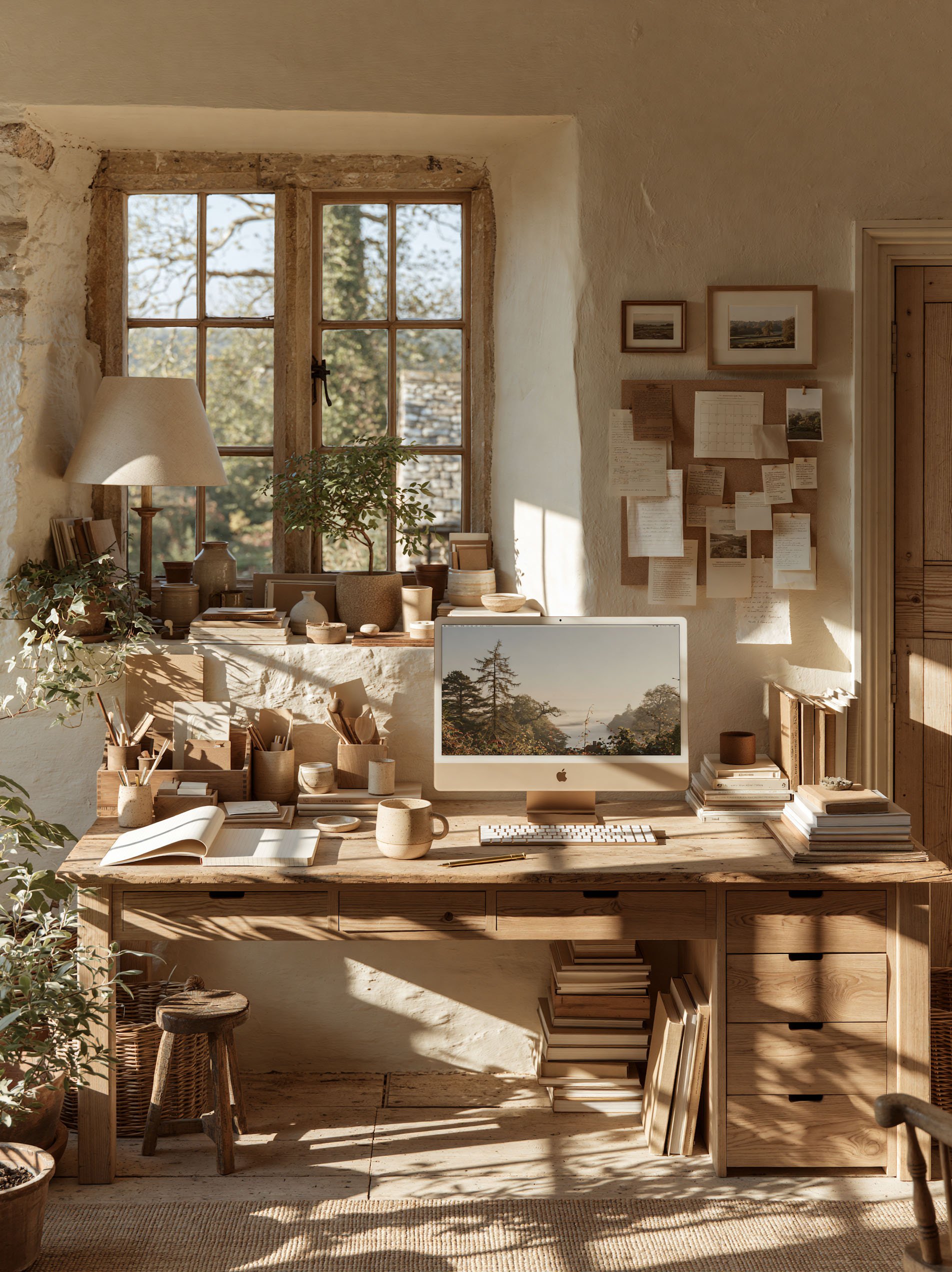
The desk as a page you arrange: objects as typography, clear surface as margin, one warm thing as the accent.
Look at your desk the way you'd look at someone else's layout. Be honest. How many visual voices are speaking at once? A charging cable doing an impression of a sentence. Three pens where the em-dash should be. A mug from a conference no one remembers, sitting precisely where the eye lands first. If a client brought you this page, you would know exactly what to do — and you would begin, gently, by removing things.
You already know how to design a page. The desk is just a page you happen to sit at. The same four moves that rescue a layout rescue a surface.
Margin first
In Negative Space Is a Material we argued that negative space is a material, and nowhere is that more literal than the thirty centimeters in front of your keyboard. Clear surface is not empty desk; it's margin — the room the work sits inside. Composing a desk starts the way composing a page does: decide how much air the content deserves, and defend it before placing a single object.
Objects have font sizes
A page has a hierarchy: one large voice, a middle register, small print. So does a surface. The lamp is your display type — one is plenty. Notebook and current tools are body copy: present, quiet, doing the actual work. Everything else is small print, and small print belongs in the drawer, not the headline. If three objects on your desk are all claiming display size, that's not decoration; that's three headlines.
One warm accent
Every page the studio sets gets one accent — a single place the burnt-sugar tone is allowed to appear. The desk earns the same rule. One object that exists purely because it warms you: the ceramic your friend made, the stone from the coast, the small brass thing with no function. One is an accent. Four is a shelf that wandered.
Reset like a print run
A composed page stays composed because it ships. A desk never ships — so it drifts, object by object, back into noise. The fix is borrowed from the print room: a reset at the end of each day, ninety seconds, everything back to the baseline grid. Not cleaning. Recomposing. Tomorrow's first hour is designed tonight.
None of this is about owning less, exactly. It's about the desk greeting you the way a well-set page greets a reader: legible, calm, one warm thing catching the light.
In The Studio Archive this week: the studio's desk, photographed and annotated like a layout — every object justified or evicted — plus a pocket checklist for the evening reset. The post is the principle; the file is the walkthrough.